10 Fun and Educational After School Activities for Kids in Indiranagar
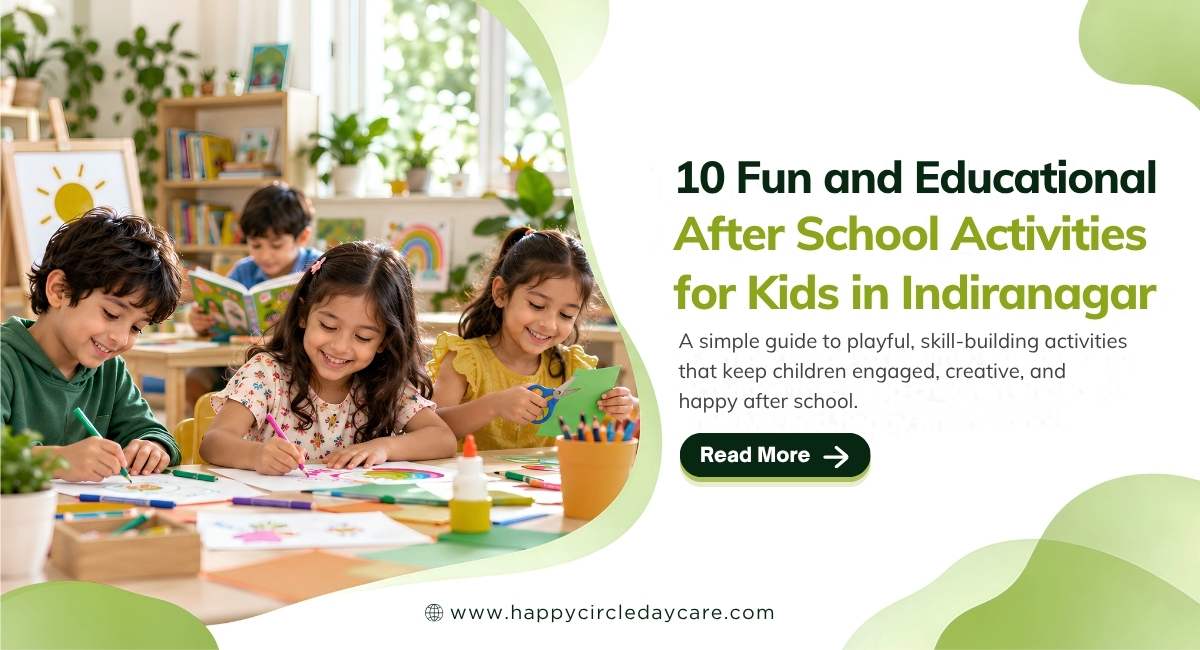
Table of content
- Introduction
- Why After School Activities for Kids Can Be Valuable
- How to Choose Kids After School Activities in Indiranagar
- 10 Fun After School Activities for Children in Indiranagar
- What to Look for in After School Activities for Children in Indiranagar
- Keep Homework and Activities in Balance
- Avoid Filling Every Afternoon With Classes
- Conclusion
- Frequently Asked Questions
Introduction
School gives children important academic learning, but some of the most enjoyable learning can also happen after the final bell rings.
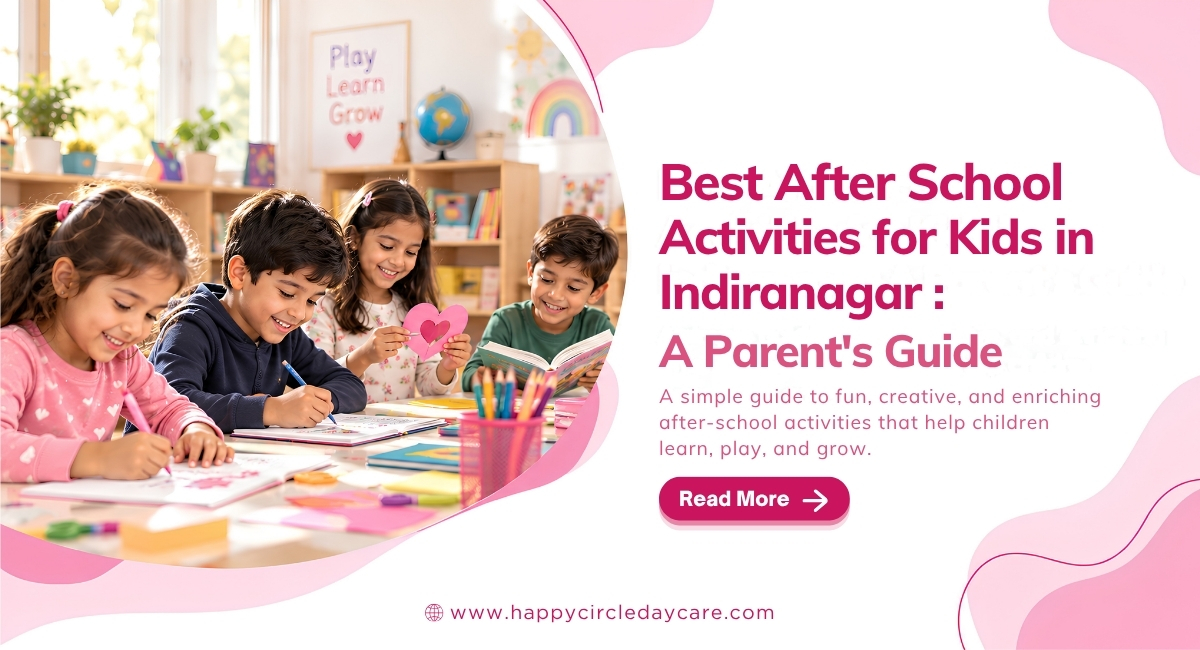
The right after school activities for kids can give children a chance to paint, build, read, experiment, move, solve problems and discover what they genuinely enjoy. For parents in Bangalore, these activities can also make the hours between school and evening pickup more meaningful.
The aim should not be to fill every free hour with another class. Children already spend a large part of their day following a school timetable. After-school time should feel different. It should have enough structure to keep children engaged, while still allowing room for creativity, choice and relaxation.
For families comparing kids after school activities in Indiranagar, this guide shares ten practical options that combine fun and learning without making the afternoon feel like another school day.
Why After School Activities for Kids Can Be Valuable
A good after-school activity gives children something different from their regular classroom experience. Instead of only listening or completing written work, they can create, move, experiment and work with other children.
According to research from the Afterschool Alliance, high-quality after-school programs enhance key developmental areas including academic engagement, learning outcomes, physical fitness, well-being, and skill acquisition. This highlights why thoughtfully structured out-of-school opportunities offer significant benefits for children.
A healthy afternoon should still leave room for rest. The American Academy of Pediatrics notes that school-age children may need active play and relaxation after spending six to eight hours at school.
How to Choose Kids After School Activities in Indiranagar
Start with your child's interests rather than the activity that looks most impressive on paper. A child who enjoys taking things apart and rebuilding them may be interested in STEM projects. Another who constantly invents stories may enjoy reading, drama or creative writing.
Also look at the complete weekday. School, homework, travel, meals, sleep and family time still need space. If an activity makes every evening rushed, even a good class can become difficult to maintain.
Parents searching online for an after school program near me should check actual travel time during school-closing hours. A nearby programme in Indiranagar or New Tippasandra can be easier to manage than one requiring a long journey across Bangalore.
10 Fun After School Activities for Children in Indiranagar
1. Creative Art and Design Activities
Painting, sketching, collage, paper craft, clay modelling and simple design projects are enjoyable ways for children to use imagination after school.
The activity becomes more valuable when children are allowed to make choices. Instead of asking everyone to create the exact same picture, a facilitator might provide a theme and allow children to decide the colours, shapes or materials they want to use.
For parents seeking fun activities for children in Indiranagar, creative programs are a strong option. These activities allow children to participate without the pressure of a single correct answer and are ideal for afternoons when a calmer alternative to sports or academics is preferred.
2. Simple Science Experiments
Science becomes much more interesting when children can see something happen in front of them.
Simple supervised experiments might explore magnets, floating and sinking, colour mixing, shadows, plants or basic reactions using age-appropriate materials. The purpose is not to memorise scientific definitions. It is to encourage children to predict, observe and ask questions.
A strong activity leader might ask, “What do you think will happen?” before the experiment and “Why do you think that happened?” afterwards. This turns a simple demonstration into an opportunity to think.
These hands-on sessions can be useful educational activities for kids in Indiranagar, particularly for children who enjoy learning by doing rather than only reading.
3. Building and STEM Challenges
Give children blocks, construction materials or simple recyclable objects and ask them to solve a challenge. They might build the tallest stable tower, create a bridge for a toy car or design a container that can hold a particular object.
The first attempt may not work, and that is part of the activity. Children can change their design, test it again and learn from what happened. Afterschool research highlights hands-on experiences, including STEM learning, as one of the ways programmes can give children opportunities beyond their normal classroom day.
STEM activities can be especially engaging when the adult guides the process without providing every answer.
4. Reading and Story Creation
Reading after school does not need to mean another comprehension worksheet.
Children can choose an interesting book, listen to a story or read a short comic. Once they are comfortable with the story, they can imagine a different ending, create a new character or draw what they think should happen next.
This combines reading with creativity and conversation. For children who already spend a lot of time on written homework, story-based activities can keep literacy enjoyable without making it feel like another lesson.
5. Puzzles and Thinking Games
Puzzles can make children think without making them feel that they are taking a test.
Jigsaw puzzles, tangrams, matching challenges, riddles, memory games, simple number puzzles and age-appropriate logic games can all become useful learning activities for kids in Indiranagar.
The adult supporting the activity should avoid solving every difficulty immediately. A child benefits from having enough time to try another approach. A simple question such as “What else could you try?” can be more useful than giving the solution.
These activities are also practical indoor activities for kids in Indiranagar, especially on rainy days or when outdoor play is not possible.
6. Music and Rhythm Activities
Children do not need formal musical training to enjoy music after school. Clapping patterns, rhythm games, singing, simple percussion instruments and movement to music can create an energetic but enjoyable afternoon session.
Children can take turns creating a rhythm for the group to copy or identify changes in speed and sound. Older children who are interested can gradually explore singing or an instrument in a more structured way.
Music can be particularly useful for children who enjoy performing and expressing themselves but may not be interested in competitive sport. The focus at this stage can remain participation and enjoyment rather than perfect performance.
7. Movement and Fitness Games
After sitting at a desk for a large part of the school day, children often need opportunities to move. Movement sessions can include relay games, balance challenges, simple yoga, dance, ball games or obstacle courses designed for the available space and the child's age.
The American Academy of Pediatrics notes that play and physical activity are important alongside schoolwork, and that children may benefit from active play after a long learning day.
The activity does not always need to become sports coaching. Some children simply need an enjoyable way to stretch, move and use their energy.
8. Gardening and Nature Activities
A small plant can become a surprisingly interesting project. Children can sow seeds, water plants, observe new leaves and notice how the plant changes over time. They can keep a simple drawing journal showing what they see each week.
Even when a large garden is not available, small pots or supervised nature projects can help children observe the world more closely. This type of activity also introduces patience because plants do not grow instantly. Children have to return, care for them and notice gradual changes.
Nature activities can be especially useful for balancing afternoons that otherwise involve a lot of books and screens.
9. No-Fire Cooking and Food Activities
Simple food preparation can combine maths, reading and everyday independence.
With suitable adult supervision, school-age children can prepare activities such as assembling a fruit bowl, making a simple sandwich or following an age-appropriate no-fire recipe. They may need to count ingredients, read instructions, compare amounts and follow a sequence.
Food activities should always follow proper hygiene, allergy information and supervision. Parents should confirm the programme's practices before a child participates.
10. Board Games and Team Challenges
Board games can offer much more than entertainment. Age-appropriate games can encourage children to wait for their turn, understand rules, make choices and manage both winning and losing.
Team challenges add another layer. Children might solve a puzzle together, complete a building task or participate in a simple group problem. These experiences allow them to communicate and make decisions with other children in a less formal environment than the classroom.
For children who enjoy company, these activities can become one of the most enjoyable parts of the afternoon.
What to Look for in After School Activities for Children in Indiranagar
A strong programme does not need to offer twenty different classes. What matters more is how children participate.
Ask whether activities are appropriate for different age groups and whether children get enough time to explore rather than simply rushing from one session to another. Find out how much of the afternoon is directed by adults and whether children have opportunities to make choices.
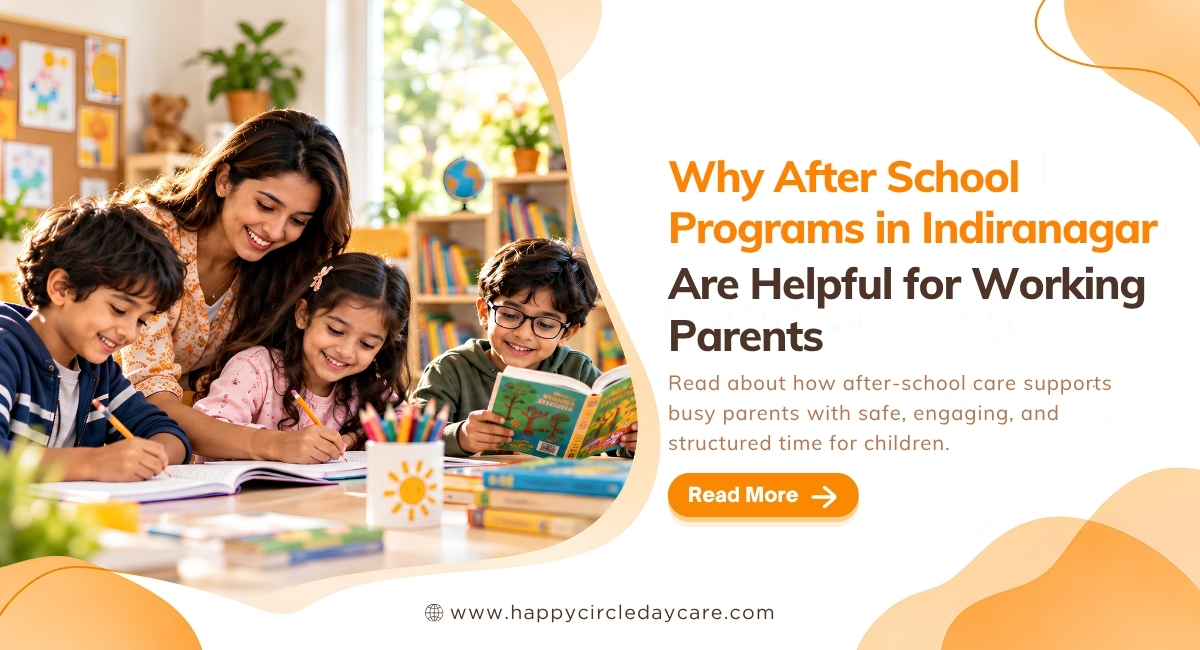
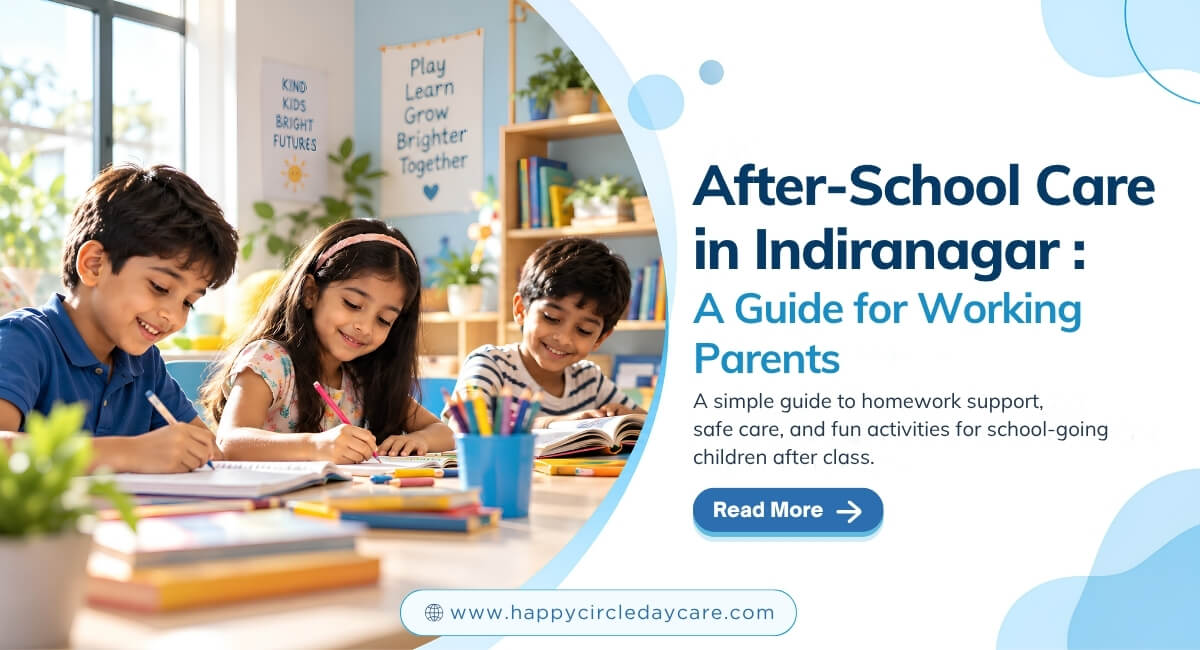
Parents should also understand the difference between an activity class and after-school childcare. A specialised art or sports class may last only an hour. After-school care usually covers a longer period and may include supervision, snacks, homework support and activities until parents are available.
Keep Homework and Activities in Balance
Homework still needs attention, but it does not always have to be the first thing a child does after leaving school. There is no single correct homework time. Some children work well soon after school, while others benefit from time to relax or play first.
Parents can use this idea when evaluating a programme. Ask whether the child's entire afternoon is dominated by homework or whether there is a reasonable balance between school tasks and enjoyable experiences.
The aim should be to support education without turning after-school hours into another full classroom session.
Avoid Filling Every Afternoon With Classes
It can be tempting to enrol a child in drawing on Monday, coding on Tuesday, dance on Wednesday, sport on Thursday and music on Friday. That timetable may suit some highly energetic children, but it can be too much for others.
The child's response matters. Are they excited before the activity? Do they still get enough sleep? Is there time to relax at home? Are weekends becoming only a chance to catch up on unfinished schoolwork? A manageable programme leaves room for both organised activities and ordinary free time.
Parents do not need to turn every interest into a formal course. Sometimes a child benefits just as much from spending an afternoon drawing, building or reading without a performance target.
Conclusion
Good after school activities for kids should give children something they look forward to.
For one child, that might be painting. Another might enjoy experimenting with science, solving a puzzle, growing a plant or moving to music. There is no need for every child to follow the same combination.
When comparing kids after school activities in Indiranagar, focus on interest, age, travel time, programme quality and the amount of free time left in the child's week.
After-School Activities at Happy Circle Childcare & Daycare
Make your child’s after-school time fun, creative, and productive at Happy Circle Childcare & Daycare. Our after-school activities include Dance Classes, Phonics Classes, Drawing Classes, Abacus Classes, and Tuition for Classes 1st to 8th, designed to support learning, creativity, and skill development.
For more details about our after-school activities, call us or visit our centre today. Enroll Now and give your child an engaging place to learn and grow after school.
Frequently Asked Questions
Does Happy Circle offer after-school activities?
Happy Circle provides an after-school care program that includes snacks, assistance with homework, storytelling, and engaging activities. To receive updated schedules and details on age-appropriate programs, parents are encouraged to reach out to the centre directly.
What is the difference between after-school care and an activity class?
An activity class usually focuses on one skill for a fixed session, such as dance or art. After-school care generally covers the period between school and parent pickup and may include supervision, homework support, food and different activities.
How many after-school activities should a child attend?
There is no fixed number that suits every child. Consider school hours, homework, travel, sleep and free time. If the child regularly feels tired or has no unplanned time, the schedule may need to be reduced.
Are educational after-school activities always academic?
No. Learning can happen through cooking, games, art, teamwork, building and movement. An activity does not need a worksheet to be educational.
Which indoor activities are useful after school?
Art, board games, puzzles, storytelling, building challenges, music and supervised science projects can all work indoors. Choose activities that allow children to participate actively rather than spend the whole session watching.
What are the best after school activities for kids?
The best activity depends on the child's age, interests and energy. Creative art, STEM challenges, reading, puzzles, movement, music and practical life-skill activities can all be useful. The child should enjoy participating rather than feeling forced into another class.

Happy Circle Child Care & Day Care
Happy Circle Day Care