What Is the Right Age to Start Preschool? A Parent's Complete Guide
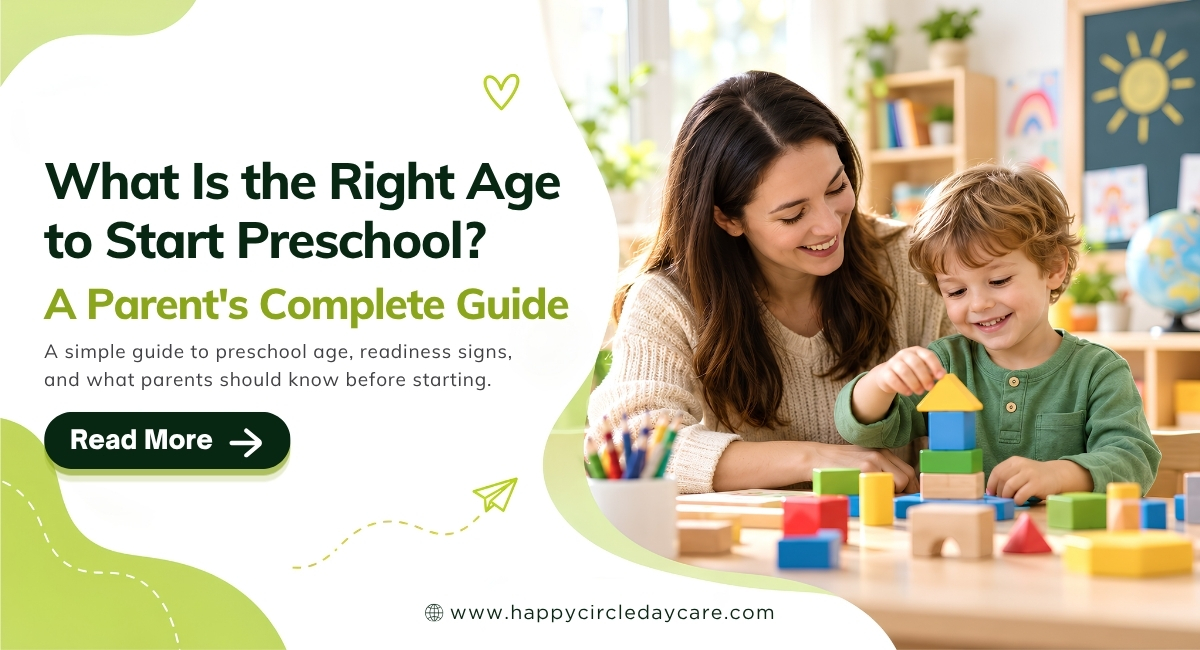
Table of content
- Introduction
- What Is the Right Age to Start Preschool in India?
- Understanding Preschool Admission Age in India
- Signs Your Child Is Ready for Preschool
- Why Emotional Readiness Matters More Than Age Alone
- Benefits of Starting Preschool at the Right Time
- Daycare vs Preschool: What Should Parents Choose?
- How to Prepare Your Child for Their First Preschool Experience
- What Parents Should Check Before Choosing a Preschool
- Conclusion
- Frequently Asked Questions
Introduction
Watching your child grow is a wonderful experience, but it also brings many questions. One common question parents have is when to send their child to preschool. Some children are excited to meet new friends and try new activities, while others may feel shy or uncomfortable away from home. This is completely normal.
Finding the right age to start preschool can be confusing because every child grows and learns differently. Age is important, but your child's confidence, communication and ability to adjust to new surroundings also matter. Starting preschool should be a happy experience for your little one. This guide will help parents understand preschool admission ages in India, recognise signs of readiness and prepare their children for their first preschool experience.
What Is the Right Age to Start Preschool in India?
Most children begin some form of preschool between two and four years of age. However, there is no single age that suits every child. Some children enjoy group activities at two and a half years, while others may need more time to feel comfortable away from home.
What Is the Best Age for Preschool?
The best age for preschool depends on a child's development and the type of programme offered. Playgroups may welcome younger children, while nursery programmes often begin around three years. At this stage, children learn through songs, stories, games and hands-on activities. Parents should not feel pressured to begin formal learning early. A good preschool experience focuses on play, communication, independence and social interaction rather than academic performance. The goal is to help children feel comfortable learning with others.
Understanding Preschool Admission Age in India
Preschool age requirements can differ between institutions and states. In India, the National Education Policy 2020 introduced a foundational stage covering children aged three to eight years. This includes three years of preschool or Anganwadi education followed by Classes 1 and 2.
Common Preschool Age Groups
The preschool admission age in India often follows these approximate ranges:
✓ Playgroup: 2 to 3 years
✓ Nursery: 3 to 4 years
✓ LKG: 4 to 5 years
✓ UKG: 5 to 6 years
These are general ranges, not universal admission rules. Schools may follow different cut-off dates and state-specific requirements. Parents can refer to the Ministry of Education for information about India's education policy. Before applying, always confirm the current age criteria directly with the preschool.
Signs Your Child Is Ready for Preschool
Age alone cannot tell parents whether a child is ready for preschool. Daily behaviour and comfort with new experiences provide useful clues. Children do not need to master every skill before starting.
Common Signs of Preschool Readiness
Some signs your child is ready for preschool include showing interest in playing with other children, following simple instructions and communicating basic needs. For example, your child may tell you when they are hungry, thirsty or need help. They may also enjoy picture books, colouring, building blocks or simple pretend-play activities. A child who can spend short periods with a familiar caregiver may find the transition easier. However, separation anxiety is common among young children. Parents should view these signs as helpful observations rather than a strict checklist. Children develop different abilities at different times.
Why Emotional Readiness Matters More Than Age Alone
Starting preschool introduces children to unfamiliar adults, new routines and other children. For some, this feels exciting. For others, it may take time to adjust. Emotional readiness involves gradually learning to feel safe and comfortable in a new environment.
Understanding Separation Anxiety
A child may cry during drop-off or ask repeatedly when their parent will return. This does not automatically mean they are too young for preschool. Parents can help by creating a predictable goodbye routine and explaining when they will return. Avoid leaving without saying goodbye, as this may increase uncertainty. According to UNICEF Parenting, responsive caregiving and supportive relationships are important for young children's development. Teachers should also provide reassurance and allow children time to settle. A patient approach can make the first few weeks more comfortable.
Benefits of Starting Preschool at the Right Time
A suitable preschool environment gives children opportunities to explore, communicate and build relationships. Early learning should involve enjoyable experiences rather than pressure to achieve academic milestones.
Building Confidence and Independence
Children gradually learn to participate in group activities, follow simple routines and make small choices. For example, choosing a colouring activity or putting toys away can help develop independence. Preschool also introduces children to friendships and cooperation. Through play, they practise sharing, listening and taking turns. The American Academy of Pediatrics highlights the importance of play in supporting children's development. Stories, songs and creative activities can also support early language and thinking skills. The benefits depend on the quality of the learning environment and whether activities match the child's developmental needs.
Daycare vs Preschool: What Should Parents Choose?
Parents sometimes find it difficult to understand the difference between daycare and preschool. Both can support young children, but their main purposes may differ.
Understanding Daycare and Preschool
When comparing daycare vs preschool, parents should consider their child's needs and daily routine. Daycare generally provides supervision, care, meals, rest and age-appropriate activities during the hours children attend. Preschool usually focuses on structured early learning experiences, including play, language, movement and social interaction. Some childcare centres offer both services. For working parents, a programme that combines care and early learning may be convenient. However, parents should check the actual activities, staff availability, safety arrangements and timings. The right choice is one where the child receives suitable care and opportunities to learn comfortably.
How to Prepare Your Child for Their First Preschool Experience
Preparing children gradually can make the first preschool experience less stressful. Parents can begin introducing small routines a few weeks before the starting date.
Simple Ways to Make the Transition Easier
Talk positively about preschool and explain what children may do there. You can describe activities such as drawing, singing, playing and listening to stories. Reading picture books about starting school can also help. Encourage your child to practise simple tasks such as washing hands, putting away toys and asking for help. If possible, visit the preschool together before the first day. Allow your child to become familiar with the classroom and teachers. Maintain a consistent sleep and morning routine. Most importantly, listen when your child expresses worries. Avoid comparing their adjustment with that of other children. Some children settle quickly, while others need additional reassurance.
What Parents Should Check Before Choosing a Preschool
Choosing a preschool involves more than checking the admission age or distance from home. Parents should look for an environment where children feel safe, respected and supported.
Finding a Suitable Learning Environment
Families exploring a preschool in Indiranagar can begin by visiting centres and observing how teachers interact with children. Look for clean classrooms, safe play areas, suitable learning materials and age-appropriate activities. Ask about teacher availability, supervision, hygiene and emergency procedures. Parents should also understand how the centre manages separation anxiety and communicates with families. When exploring early childhood education Bangalore options, it is useful to compare daily routines, learning approaches and available programmes.
You can visit Happy Circle Childcare & Daycare to learn about its childcare environment centre's Daycare Programmes page provides additional information about available services. A personal visit can help parents decide whether a centre suits their child's needs.
Conclusion
Starting preschool is an important milestone, but there is no need to rush the decision. While many children begin preschool between two and four years, readiness depends on their emotional comfort, communication and interest in new experiences. Parents can make the transition easier by introducing simple routines, offering reassurance and choosing a supportive learning environment. The most important goal is to help children begin their learning journey with confidence and curiosity.
At Happy Circle Childcare & Daycare, we believe every child deserves a safe, loving and happy place to learn and grow. Our caring team, fun-filled activities and age-appropriate learning programmes help children build confidence, make friends and develop healthy habits. If you're looking for a nurturing environment for your little one, explore our Daycare Admissions to learn more about our programmes. Give your child a wonderful start to their early years and Enroll Now at Happy Circle Childcare & Daycare!
Frequently Asked Questions
How do I know whether a preschool is suitable for my child?
Visit the centre, observe teacher-child interactions and ask about safety, routines, activities and communication with parents. Choose an environment that supports your child's individual needs.
What if my child cries every morning at preschool?
Some children experience separation anxiety during the first few weeks. Consistent routines and patient support can help. If distress continues, speak with the teachers and consider additional guidance.
Does my child need to know the alphabet before preschool?
No. Preschool is intended to introduce early learning through play and exploration. Children do not need to know letters or numbers before joining.
Can my child start preschool at three years old?
Yes. Three years is a common age for nursery admission in India, although individual schools may follow different eligibility rules.
Is two years too early to start preschool?
Not necessarily. Some children enjoy playgroup activities around two years of age. Readiness depends on the child and the programme's suitability.

Happy Circle Child Care & Day Care
Happy Circle Day Care