6 Fun and Engaging Balance and Coordination Games for Young Children
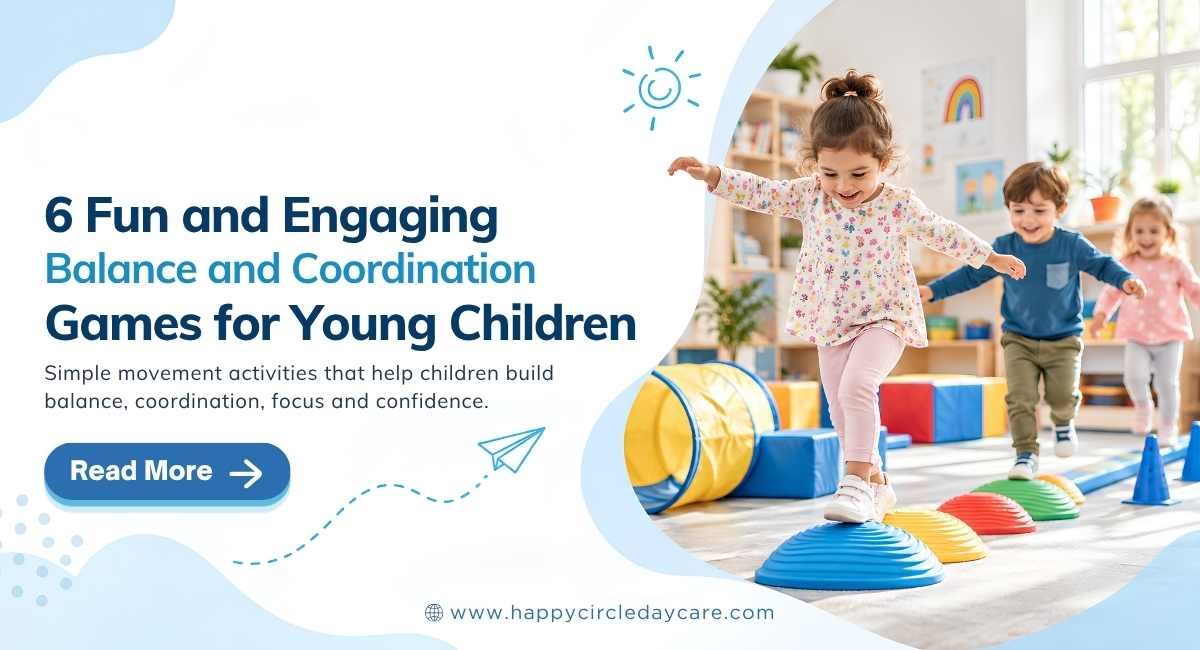
Table of content
- Introduction
- Why Physical Development Activities for Preschoolers Matter
- Balance Games for Kids: 1. Follow-the-Line Walk
- Coordination Activities for Preschoolers: 2. Balloon Keep-Up
- Gross Motor Activities for Toddlers: 3. Stepping Stones
- Balance and Coordination Games for Children: 4. Animal Walk Trail
- Physical Development Activities for Preschoolers: 5. Beanbag Balance and Toss
- Outdoor Activities for Preschoolers: 6. Mini Obstacle Course
- Adapting Movement Games for Different Ages
- Making Movement Games Safe and Encouraging
- Conclusion
- Frequently Asked Questions
Introduction
Young children learn a lot by moving their bodies. Walking along a line, reaching for a balloon, jumping between spots or carrying an object while moving may look like simple play, but these experiences give children opportunities to practise balance, body control and coordination. The best balance games for kids do not need expensive equipment or complicated rules. With a little space and adult supervision, parents and caregivers can turn everyday movement into enjoyable learning.
Why Physical Development Activities for Preschoolers Matter
Young children are still learning how to control their bodies during walking, running, jumping, throwing and catching. NAEYC explains that preschool programmes can support physical development through activities such as running, climbing, jumping, throwing and catching. These experiences help children practise large-body movements through active play.
The World Health Organization also highlights early childhood as an important period for physical and cognitive development and recommends regular physical activity throughout the day for children under five. This does not mean young children need formal exercise sessions. Simple games, free movement and play based learning for toddlers can provide many useful opportunities to practise new skills.
Balance Games for Kids: 1. Follow-the-Line Walk
A follow-the-line walk is one of the simplest balance games for kids. Place a strip of masking tape on the floor in a straight line, gentle curve or simple zigzag. Ask the child to walk slowly along it while trying to keep their feet close to the line. For younger children, make the path wider and shorter. Children around three to six years can gradually try longer or slightly more challenging paths.
Once the basic version becomes easy, make the game playful. The child can pretend the line is a bridge over a river, walk while holding a soft toy or pause when they reach a coloured marker. The purpose is not perfect walking. It is giving children repeated chances to control their speed, place their feet carefully and adjust their body position.
Coordination Activities for Preschoolers: 2. Balloon Keep-Up
Balloon keep-up is an easy option among coordination activities for preschoolers because the balloon moves slowly enough for young children to watch and respond. Ask the child to gently tap a balloon into the air and try to stop it from touching the floor. Children around three to six years may enjoy this activity indoors where there is enough open space.
As the child becomes more confident, ask them to alternate hands or move a few steps before tapping the balloon again. The activity encourages them to watch an object, judge where it is moving and coordinate their hands with their eyes. It is also one of the easier indoor movement games for kids because it requires very little equipment and can be adjusted to the available space.
Gross Motor Activities for Toddlers: 3. Stepping Stones
For a simple stepping-stone game, place flat markers, paper shapes or secure floor spots a short distance apart and ask the child to move from one to another without stepping outside them. For toddlers, keep the spaces close enough that they can walk naturally. Older preschoolers can try slightly wider gaps or different directions.
Among gross motor activities for toddlers, this game is useful because children have to think about where to place their next foot while keeping their body steady. The activity can also become imaginative. The spots might become islands, lily pads or stones across a pretend stream. Keep all markers flat and non-slip so the game stays safe.
Balance and Coordination Games for Children: 4. Animal Walk Trail
Animal walks combine imagination with large-body movement. Ask children to move like different animals across a short path. They might take slow bear steps, waddle like a duck, stretch like a tall giraffe or crawl carefully like a cat. The movements should always be comfortable and suitable for the child's age.
These balance and coordination games for children give them opportunities to use their arms, legs and trunk in different ways. Changing from one movement to another also encourages body awareness. Younger children may simply copy the adult, while older preschoolers can choose an animal and invent their own safe movement.
Physical Development Activities for Preschoolers: 5. Beanbag Balance and Toss
A soft beanbag can be used for several physical development activities for preschoolers. One simple game is asking the child to carry a beanbag on an open palm while walking slowly from one point to another. Children who are ready for a greater challenge can try balancing it briefly on their shoulder or head while standing still.
You can then change the activity into a gentle throwing game. Place a basket or large container nearby and ask the child to toss the beanbag towards it. This allows children to practise aiming, judging distance and coordinating their eyes and hands. Keep the target close for younger children so the game remains enjoyable rather than frustrating.
Outdoor Activities for Preschoolers: 6. Mini Obstacle Course
A mini obstacle course can combine several movements in one game. Children might walk around a cone, step over a low marker, crawl through a safe tunnel and finish by throwing a soft ball into a basket. The course does not need to be difficult. For children around three to six years, two or three simple actions may be enough.
Obstacle courses are useful outdoor activities for preschoolers because they allow children to change speed, direction and body position. They can also work indoors when enough clear space is available. NAEYC notes that young children benefit from opportunities to be physically active both indoors and outdoors and to practise skills such as running, jumping, climbing, throwing and catching.
Adapting Movement Games for Different Ages
Not every child of the same age will find the same activity easy. A two-and-a-half-year-old may simply enjoy walking between large floor markers, while a five-year-old may be ready to jump between them or follow a more complicated path. Age suggestions should be treated as starting points rather than tests of development.
For younger children, make the distance shorter, slow the activity down and demonstrate it first. Older preschoolers can be given small challenges such as changing direction, counting steps or combining two movements. This flexible approach supports motor skills development in children without turning play into a competition.
The CDC notes that movement skills develop gradually and identifies abilities such as hopping on one foot and catching a large ball among preschool-age developmental milestones. Children still develop at different rates, so parents who have concerns about their child's movement should discuss them with a healthcare professional rather than comparing one game performance with another child.
Making Movement Games Safe and Encouraging
Balance games should provide a manageable challenge without creating unnecessary risk. Clear away furniture with sharp corners, use non-slip materials and keep jumping or stepping heights very low for young children. Adults should stay close enough to help, especially when toddlers are trying a new movement.
Encouragement matters too. Avoid correcting every step or asking children to perform perfectly. Saying “try once more” or changing the game can keep the experience positive. The CDC encourages parents to provide age-appropriate play equipment and allow preschoolers some choice in how they play, helping physical activity remain enjoyable.
At Happy Circle Child Care & Day Care, the curriculum includes music and movement and physical education, with a stated focus on rhythm, coordination, and gross and fine motor skills. Our preschool programme serves children from 1.6 years to 12 years in Indiranagar & New Tippasandra, Bangalore. These kinds of daycare activities in Bangalore can give children regular opportunities to move alongside other forms of play and learning.
Conclusion
Balance games for kids do not need to look like formal training. Walking along a line, chasing a balloon, moving between stepping stones or completing a small obstacle course can give children enjoyable opportunities to practise movement and body control. The best activities are simple enough to repeat and flexible enough to change as the child becomes more confident.
Happy Circle Child Care & Day Care includes play-based learning, music and movement, and physical education within its curriculum. Families looking for a daycare environment where children can learn through a mix of movement and other age-appropriate experiences can explore the programme or schedule a visit.
Frequently Asked Questions
What if my child finds a balance game difficult?
Make the game easier and allow more practice without pressure. Widen the path, reduce the distance or let the child hold an adult's hand initially. If you have broader concerns about your child's movement or development, speak with your paediatrician.
Should balance games be practised every day?
Children benefit from being active throughout the day rather than relying on one formal exercise session. WHO guidance supports regular physical activity spread across the day for young children. Balance and coordination games can simply be one enjoyable part of that active play.
Do children need special equipment for gross motor play?
No. Tape lines, soft balls, cushions, flat markers and cardboard boxes can support many simple games. What matters more is having enough safe space and choosing an activity that suits the child's age.
How do coordination games help preschoolers?
Coordination activities give children opportunities to combine different movements, such as watching a balloon while reaching for it or judging where to place their feet while stepping. Regular active play supports the developing movement skills children use in everyday life.
What are good indoor balance games for young children?
Line walking, balloon tapping, stepping between floor markers and gentle beanbag activities can work well indoors. The area should be clear, dry and free from sharp or unstable objects.
At what age can children start simple balance games?
Simple movement activities can begin during the toddler years when the child is already walking confidently. The difficulty should match the individual child's ability. Toddlers may start with wide paths and closely spaced floor markers, while preschoolers can manage more varied movements.

Happy Circle Child Care & Day Care
Happy Circle Day Care